
For freelance designers, illustrators, photographers, writers, and other creative professionals, the leap from paid projects to building a sustainable business can feel like a trade: more stability in exchange for less creative freedom. Turning creative talent into a business means building pricing confidence, consistent visibility, and clear boundaries, even when the work is deeply personal. Artistic entrepreneurship also brings challenges that rarely show up in art school: building credibility, creating offers you can repeat, and making the decisions that support a real shift into a creative career. The opportunity is a business that earns trust quickly and pays reliably.
Build Instant Trust With a Logo That Matches Your Work

When you’re turning creative talent into income, the fastest wins often come from looking as professional as your work truly is. A strong logo helps people recognize you quickly, remember you later, and feel confident you’re the real deal, especially when they’re comparing options or deciding who to hire. It also communicates your expertise at a glance by signaling the style and level of polish they can expect from your services. Most importantly, it anchors your visual identity so your marketing stays consistent everywhere your business shows up: your website, social profiles, proposals, and invoices.
If you don’t have a designer on speed dial, an online logo maker can make the process approachable, and for most creatives just starting out, that’s genuinely enough. Many tools for designing logos let you start with ready-made templates, then customize the fonts and colors until it feels aligned with your work and the clients you want to attract.
The DIY route makes the most sense when you’re early-stage, budget-conscious, or just need something workable while you focus your energy on landing clients. It’s worth bringing in a professional designer or brand consultant instead once your revenue can support it, or once your logo needs to carry real competitive weight, for example, in a crowded market where a distinct, custom identity is part of how you justify premium pricing. From there, you’ll be in a better position to pair your creative identity with the operational mindset that makes a business sustainable.
Understanding Entrepreneurial Creativity
Creative identity gets you noticed, but sustainability comes from how you run the work. Entrepreneurial creativity means pairing your creative mindset with business planning, so decisions about pricing, offers, and marketing protect your time and your craft. A useful definition of creativity frames it as recombining past ideas into what the moment needs, which is exactly what strategy helps you do on purpose. This matters because a plan reduces guesswork and burnout.
When you know what you sell, who it serves, and how you deliver, you can take better projects and say no faster. Teams that nurture a creative culture often outperform, and solo creatives can apply the same principle in a small, consistent way. Think of strategy like a sketch layer under a final illustration. It guides composition and saves revisions, but it never replaces your style. With that mindset, it’s easier to define your audience, clarify services, and choose tools that match your workflow.
Map Your First Offer and Client Pipeline in One Afternoon
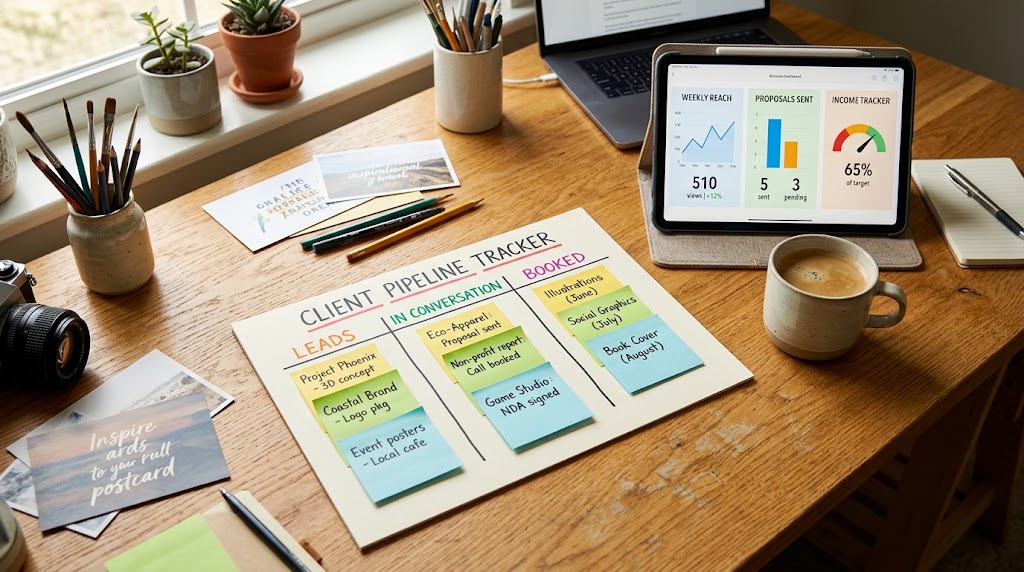
A thriving creative business doesn’t start with a perfect plan, it starts with a clear, testable path from “who I help” to “how they find me” to “how they pay me.” Use this quick map to turn your entrepreneurial creativity into a simple system you can repeat.
Define one “best-fit” audience slice: Pick a specific group you already understand (industry, budget range, timeline, values), then write a 3-line profile: who they are, what they’re trying to achieve, what they’re worried about. This works because clear constraints sharpen your creative decisions, your portfolio, messaging, and pricing stop trying to speak to everyone. If you’re stuck, remember that 65% of marketers say they have high-quality data about their target audience, so you’re not “behind,” you’re doing the work most people skip.
Turn your skills into 2–3 “menu” offers: Draft one starter offer (low risk), one core offer (your main revenue), and one premium option (depth or speed). For each, define: deliverables, timeline, what you need from the client, and a clear “definition of done.” Offers sell better than open-ended “services” because clients can picture the outcome, e.g., “brand photo shoot plan + shot list + location guidance in 7 days” instead of “creative consulting.”
Build a tiny pipeline with three stages and one metric: Create a simple tracker with three columns: Leads → Calls/Consults → Booked. Add one weekly metric that you can influence, like “5 new outreach messages” or “2 portfolio shares,” and review it every Friday for 10 minutes. Measuring even one small number keeps your creativity focused on what actually moves projects forward instead of scattered across busywork.
Choose two client attraction channels you’ll sustain for 30 days: Pick one relationship channel (referrals, past clients, local community, online groups) and one content channel (case studies, short tips, process posts). Write one clear invitation you can reuse: “I help X do Y; if you know someone preparing for Z, I’m happy to share options.” Consistency beats volume, especially when you’re balancing making the work and marketing it.
Set a budget-friendly branding baseline before you pick tools: Decide what needs to be “good enough” now: a clean wordmark or simple logo, 2 brand colors, 1–2 fonts, and a one-paragraph bio that matches your audience slice. Many creatives find that having branding in place gives them clear direction and makes it easier to reach the right audience, so treat branding as navigation, not decoration. Keep the first version minimal so you can improve it after real client feedback.
Compare logo makers with a short, workflow-first scorecard: Rate each option (1–5) on: export formats you’ll actually use (PNG/SVG), readability at small sizes, ease of editing later, license clarity, and whether it works in one color. If you’re weighing options for logo design, this kind of scorecard keeps the decision grounded in what you’ll actually need for headers, invoices, and social profiles, not just what looks good in a preview, and if none of the DIY options feel like a fit, that’s usually your cue to get a quote from a designer instead of settling. Save screenshots, pick one, and move on, your time is better spent refining offers and outreach.
When your audience, offers, pipeline, and brand basics are mapped, your creative energy has a structure to live inside, and it becomes much easier to strengthen the business habits that keep delivery, marketing, and finances steady month to month.
Strengthen Your Business Backbone With Practical Management Training
Once you’ve sketched your offer and a simple way to find clients, the next step is building the management skills that keep things steady between projects. Earning a business management degree can help creative professionals develop essential capabilities that often determine whether a great craft becomes a sustainable business: marketing fundamentals to reach the right audience, financial skills to understand what your work needs to earn, operations know-how to keep projects running smoothly, and strategic planning to make decisions that support long-term growth.
With that foundation, your business becomes less dependent on constant hustle and more supported by repeatable systems and clearer choices. An online degree can make this kind of skill-building more realistic when you’re balancing client work, family, and other responsibilities, so you can advance your education without putting your life on hold. If you’re curious what that path can include, there’s good detail here. With stronger management skills under your belt, it’s easier to tackle the practical questions that come next, pricing, client conversations, and confidence.
Creative Business Questions People Ask Most
Q: What if my creative skill is not “unique” enough to sell?
A: Differentiation rarely comes from being the only one. It comes from your point of view, process, and the specific problem you solve for a specific audience. The reminder that you have
something unique to offer the world can be a useful reset when comparison creeps in.
Q: How do I reach out to clients without feeling pushy or awkward?
A: Treat outreach like service, not persuasion. Send a short note that names the result you help create, shares one relevant example, and ends with a low-pressure question. Aim for five messages a week so confidence builds through repetition.
Q: When should I raise my prices if I am still new?
A: Raise prices when you can explain your outcomes, your timelines are filling, or you have clearer costs and boundaries. Start with new clients first, and test a 10 to 15 percent increase rather than a dramatic jump.
Q: Why does my income feel unpredictable even when I am busy?
A: Busy weeks can hide weak cash flow if deposits are small or projects are spaced out. Use a simple pipeline with follow-ups, require a deposit, and set a monthly “minimum revenue” target to guide decisions.
Q: Can I build a sustainable creative business if I hit frequent creative blocks?
A: Yes, because consistency is a system, not a mood. Create a repeatable warm-up routine, keep an “idea bank,” and switch to admin tasks when inspiration is low so momentum stays. Small steps, repeated weekly, turn talent into stability.
Understanding a Brand System Beyond a Logo
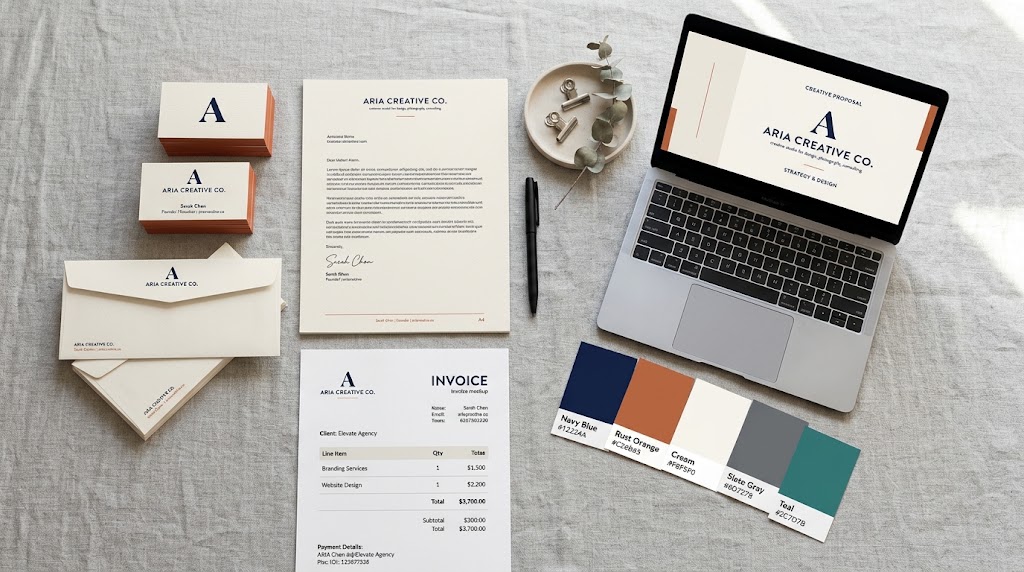
Your skills become easier to trust when your brand looks and feels the same everywhere. A brand system is the set of guidelines that turns your identity into repeatable choices, like colors, fonts, voice, templates, and how you present offers. It also maps customer touchpoints, meaning every moment someone encounters you, from a social post to an invoice. This matters because people usually do not decide after one glance. The average number of touchpoints shows how many chances you have to either build confidence or create confusion. When those touchpoints match, consistent brand presentation can translate into real business results, not just prettier visuals.
Think of your brand like a well-run studio, not a single portfolio piece. The logo is the sign on the door, while guidelines are the workflow that keeps every client interaction smooth and familiar. Pick one touchpoint this week and standardize it so creativity and strategy can support each other.
Turning Creative Work Into Stable, Sustainable Business Growth
It’s easy to feel pulled between making great work and making the business side make sense, especially when every platform and client touchpoint needs consistency. The path to creative-business success is a steady mindset: balancing creativity and business, treating business strategy as part of the craft rather than a distraction. When that approach becomes routine, decisions get clearer, confidence grows, and long-term sustainability starts to look like a plan instead of a hope. Sustainability comes from aligning your art, your brand system, and your business strategy. Choose one next step this week, review your brand guidelines and update one key touchpoint to match. That momentum keeps you motivated as a creative entrepreneur and supports steady, ongoing growth you can build on.

